Soundnine Inc.
I started working for Soundnine Inc. in 2022. This is a place where I developed new skills and honed existing ones to complete
real world engineering projects. I started my work at Soundnine by transcribing Shopbot Vcarve toolpaths into Fusion360 models.
I then did some mechanical designwork and CAM generation for some older Fusion parts that a previous machinist had left. I took
a quarter off of Uni due to some personal issues and became the primary machinist at the time for Soundnine. I ended my tenure there
doing some real mechanical engineering work, doing some preliminary designs for pressure vessels.
Soundnine is a sensor research and development company. Soundnine develops and produces in house inductive modems and housings for
environmental research. Soundnine has sensors deployed all over the world and works with domestic and international entities.
Below are some of the projects I completed in Soundnine that are most relevant to my career. I have left out a great many projects
out of respect for specific Soundnine manufacturing processes.
The Waterblock
This was my first design project at Soundnine. Soundnine uses a waterblock for heat transfer to maintain a constant temperature
when calibrating sensors. The old waterblock was smaller and the fin design was not as efficient as the one I designed.
The waterblock was designed with 40mm^2 peltiers for heating. There are circuit boards running across each peltier to reduce the effect
of possible condensation on insulated wiring. The fins are spaced 0.194" wide to provide enough clearance for a 3/16" end mill. The
machnining processes took over 10 hours, but I was limited by the spindle RPM of the machine I was working with. With a faster machine
and proper coolant system, I could have machined this part faster. I needed a custom fixture to machine the waterblock (Which I designed
and manufactured) and really needed to dial in the feeds and speeds to cut o-ring grooves with a 1mm end mill. In the end, I was able to
create a functional waterblock for the calibration baths.

Thermisitors
This project was one of the "rush" projects at Soundnine.
The reference sensors for the calibration baths were fried, and we needed a new reference sensor in order to continue assembly operations.
I was tasked with creating a few plastic housings (easy) alongside a matching number of titanium probes (hard). Bear in mind it had been
3 years since I had machined any sort of metal.
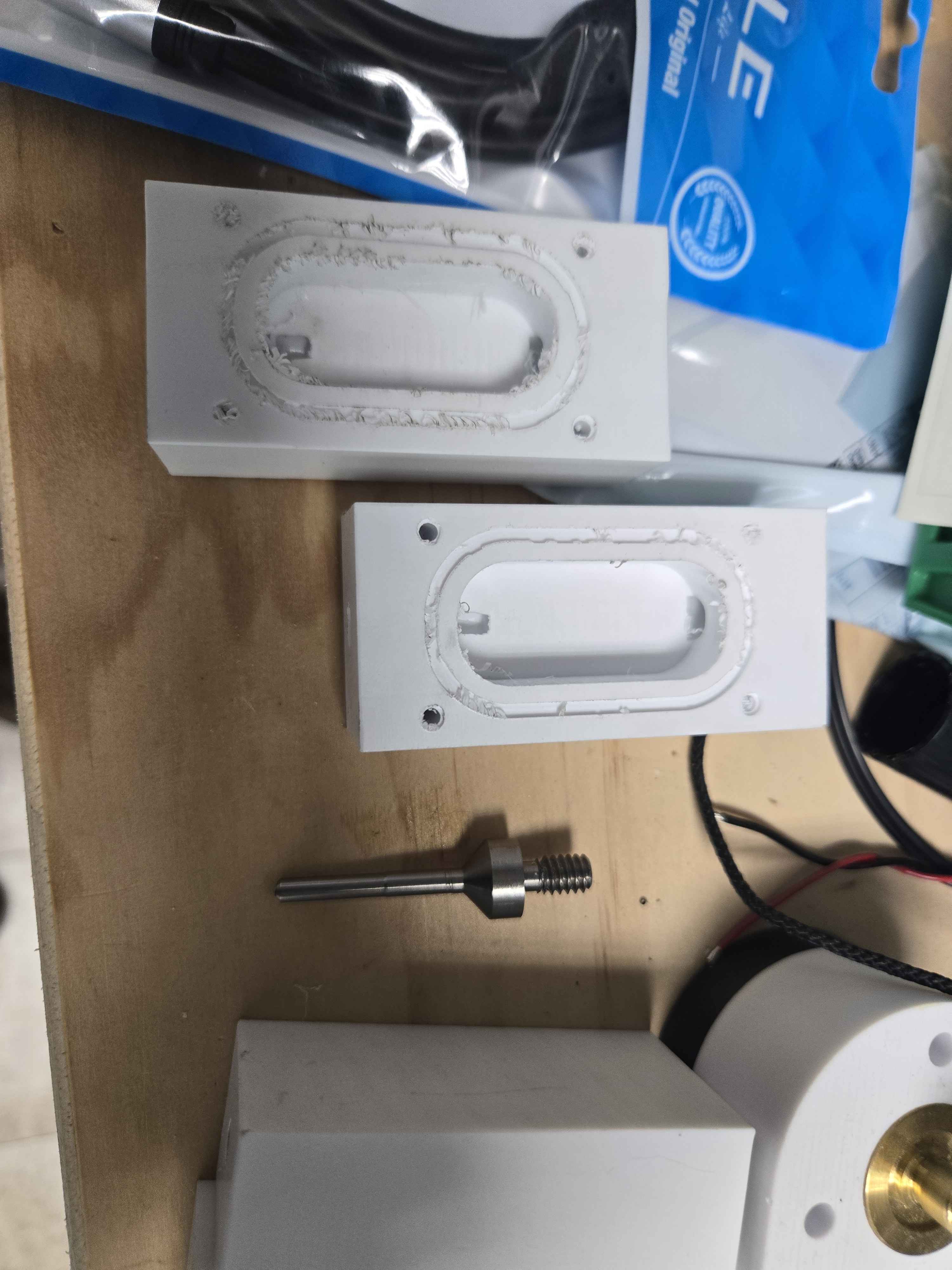
The drawing below shows a "napkin sketch" of the thermisitor probe and the end result. I had to use a cobalt drill going pretty slow with
a fair amount of cutting fluid. The hole inside was 0.0625", not exactly the easiest thing to drill with work-hardening titanium. Regardless,
I got the job done and learned something new. I wasn't involved much on the engineering side of things, but I machined everything that was
needed.

Battery Pack
This product was my first commercial design.
Soundnine needed a larger battery pack for some inductive modems. They also wanted to integrate some new manufacturing methods for a
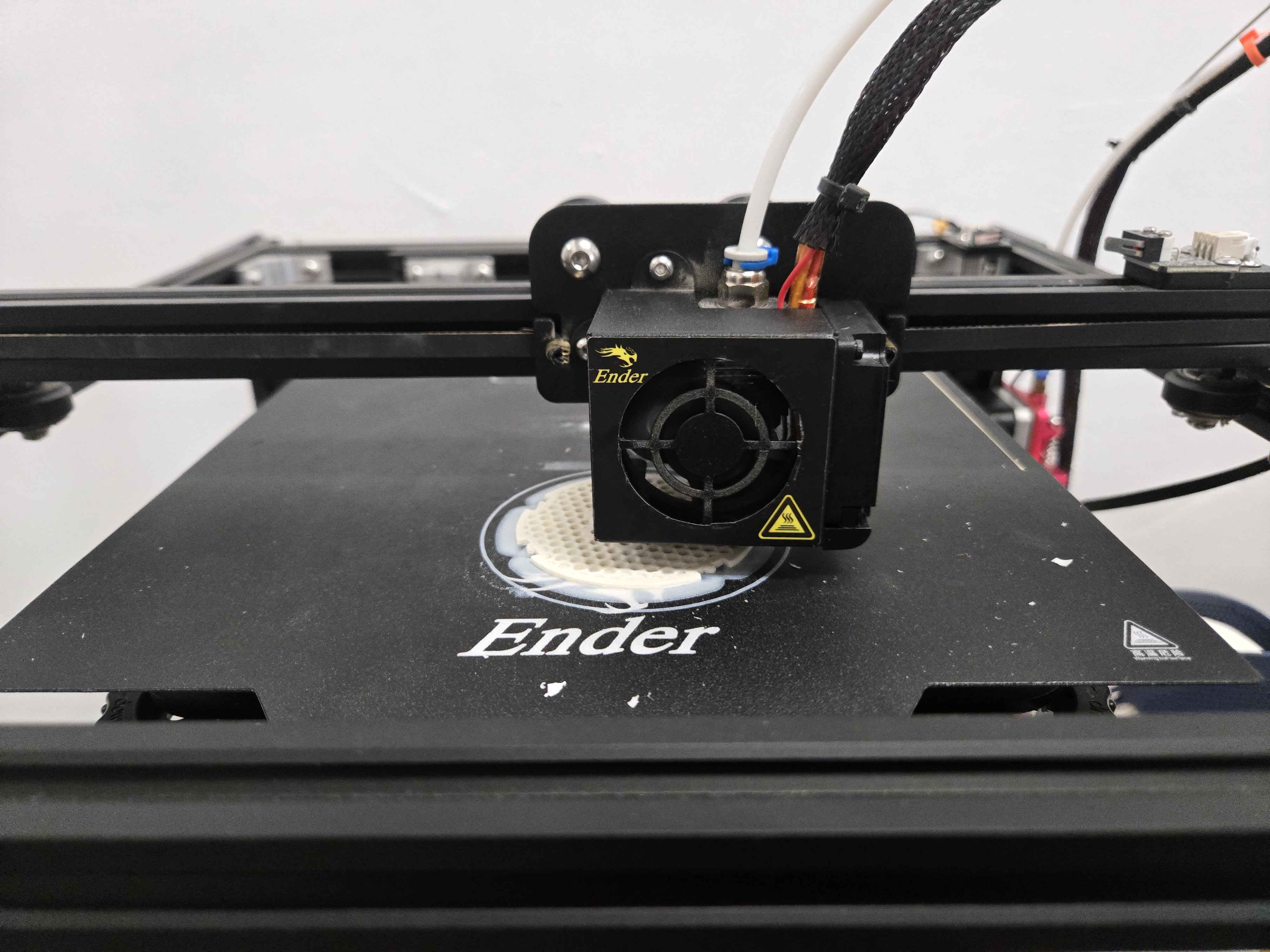
modular design. I designed a 3" diameter housing which was configurable for 16 or 24 battery cells. It integrated a whole set of 3d printed parts
for ease of assembly and manufacturek, the first in Soundnine's commercial lineup. I have both machined and printed parts for this
system, iterating the design a few times after evaluating the product. This product has sold a pretty considerable amount and is still selling today.
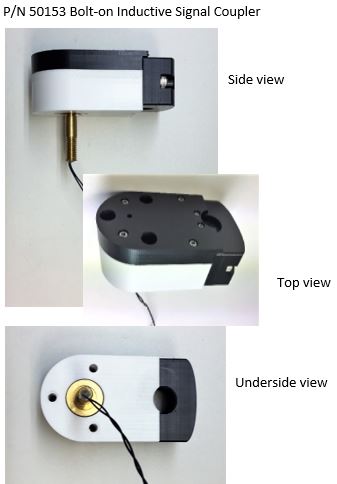
The picture of the signal coupler gives a good represenation of what the housing would look like. Just imagine a 3" diameter 26" long
housing attached right on the end of it :)
The Pressure Vessel
My crowning achievement at Soundnine. I was tasked with a preliminary design of a pressure vessel. This pressure vessel will be reviewed
and certified by a professional engineer, I was just tasked with finding a rough estimate of materials and capabilities. I learned
the engineering material for the project in my sophomore year in uni, when I took CEE 220 at the UW.
Soundnine's product range includes large battery packs (specifically the ones above) which need to be certified and tested to a certain
pressure. The need was for a pressure vessel which could withstand a certain pressure and hold large sensor modules. I used existing
stock to determine if a functional pressure vessel with a FOS of ~2 was feasible.
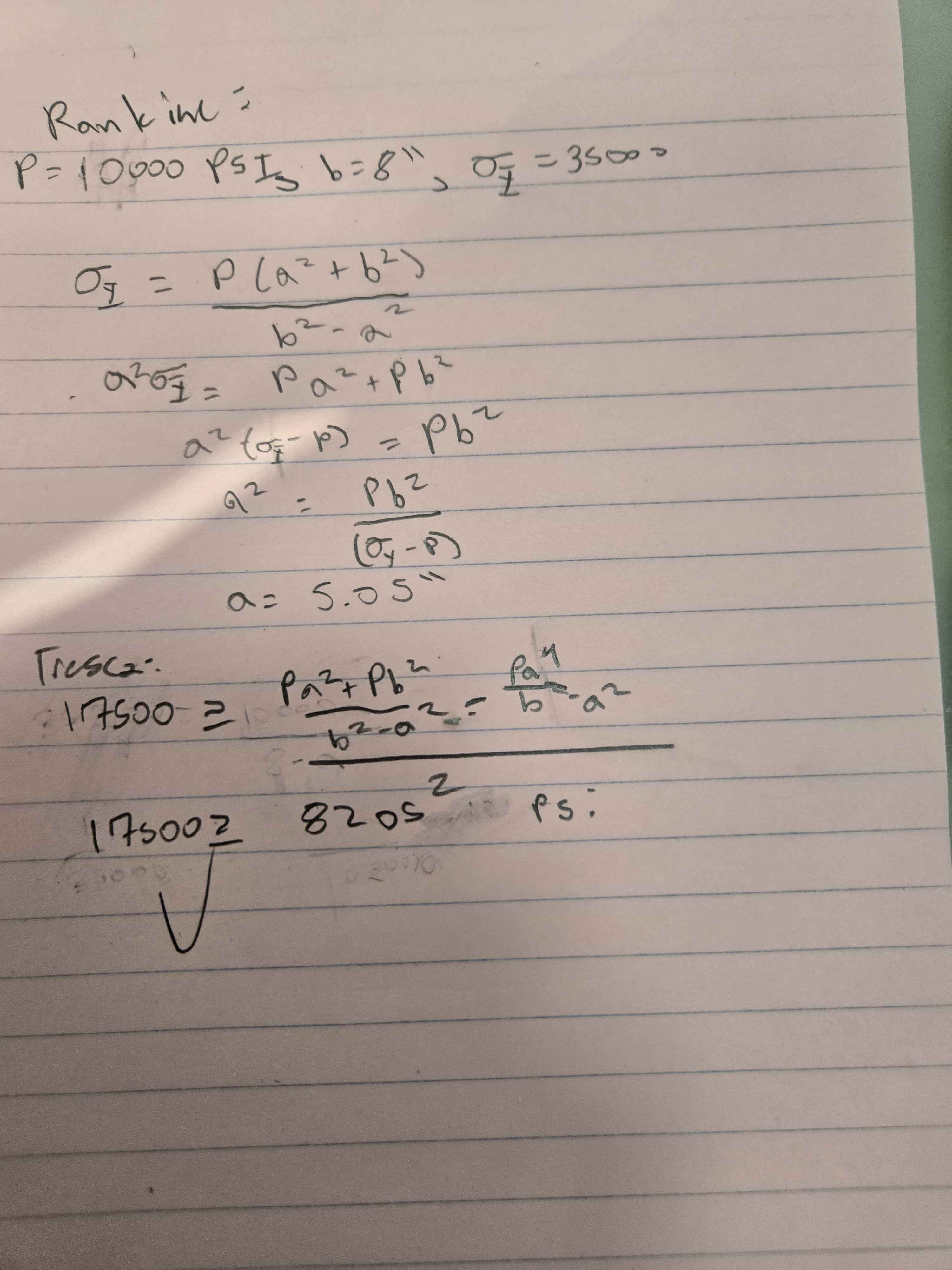
The drawing below above a preliminary analysis of the inner diameter of said pressure vessel. As the largest offering for pressure vessels at
Soundnine was ~4.9" wide, I was able to move forward with designing the pressure vessel.
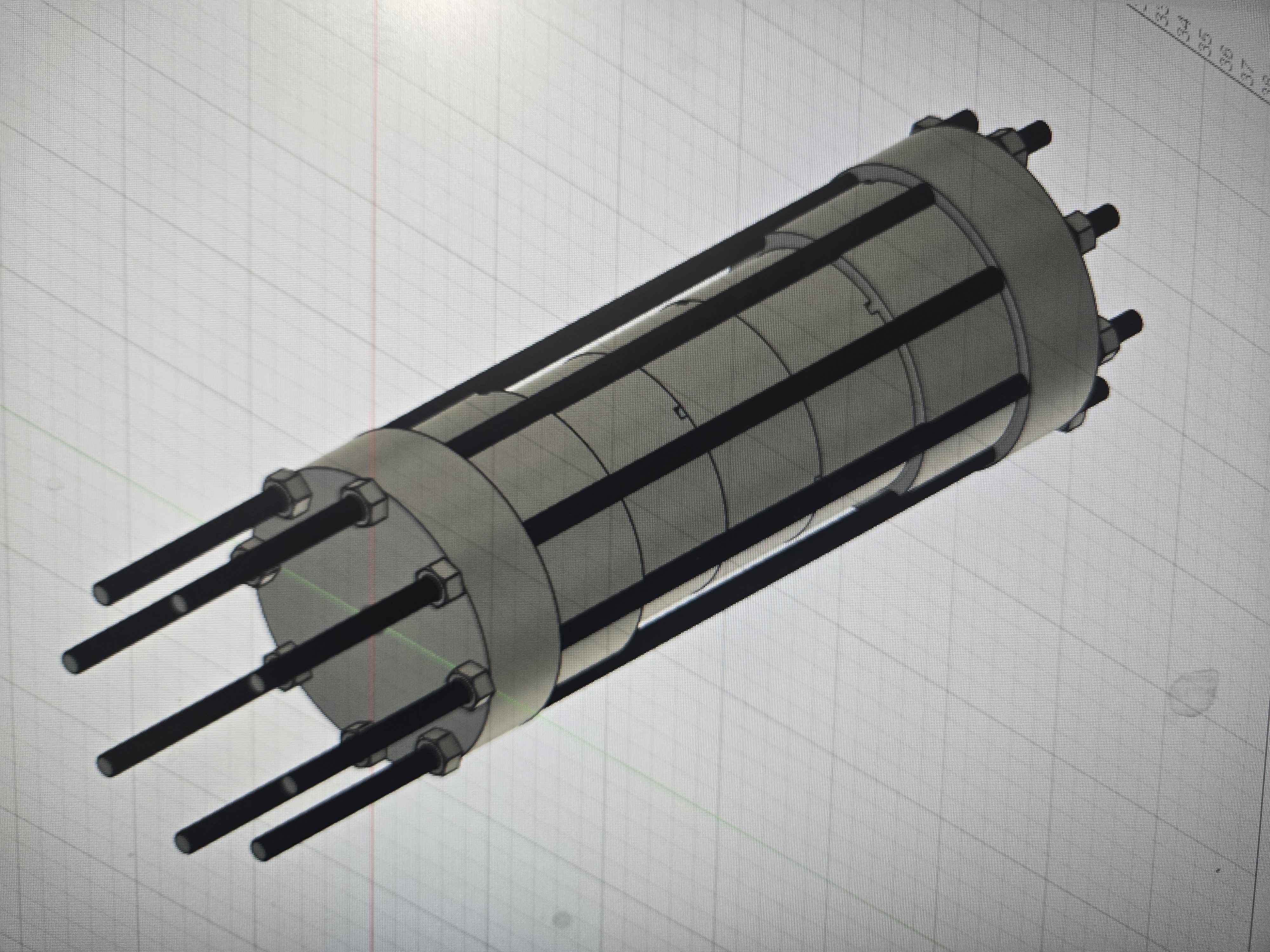
The pressure vessel is a modular stackable system, complete with 2 blind flanges to seal the modular components. Each component has an
o-ring groove to keep pressure inside of the system and pins for indexing each component. 8 3/4" studs hold the entire assembly together.
As a bonus, I did some really rudimentary Fusion simulation. The modular component passed with flying colors based on the load condition.